



In theatre, treatment done
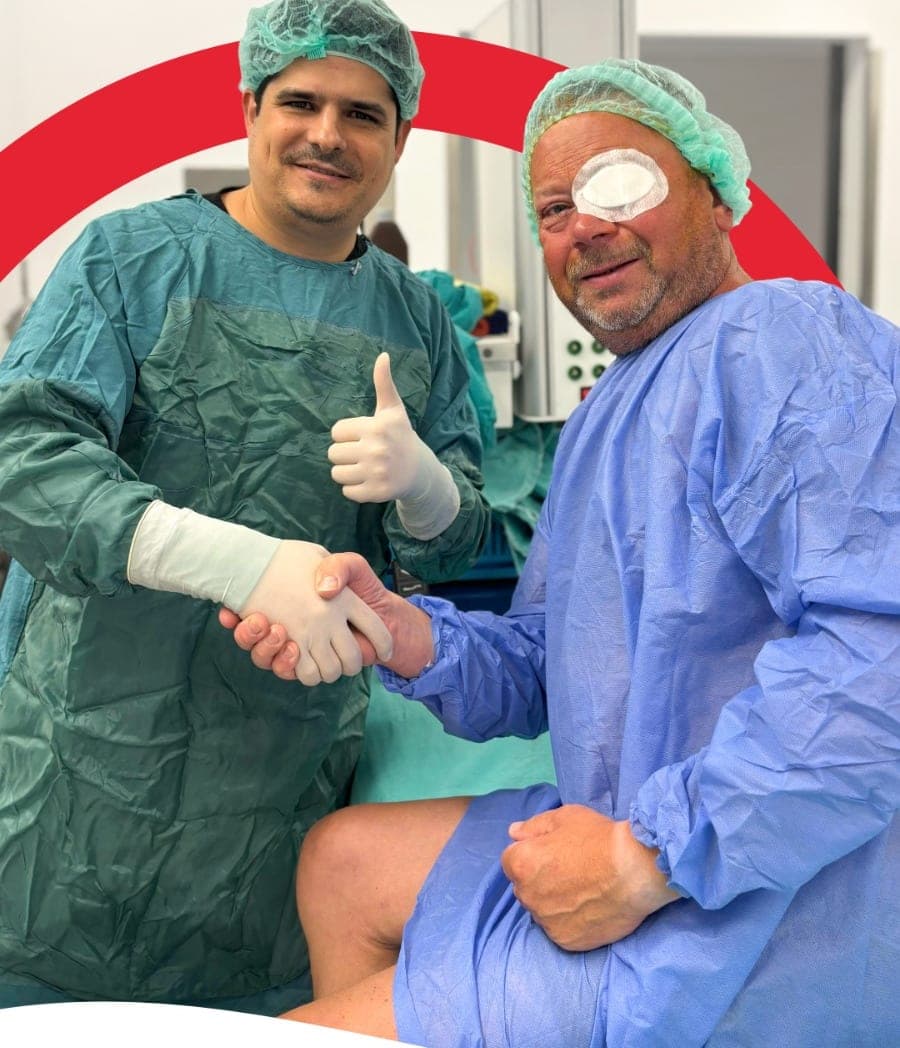
A patient in a surgical gown with a protective eye shield in place, photographed with the surgeon in theatre after laser vision correction. The shield stays on for the first hours to stop any rubbing while the eye settles.
LASIK, femto-LASIK and no-touch surface laser in İstanbul, at a JCI-accredited hospital. Whether laser suits you is decided by your corneal thickness, topography and prescription — measured on arrival, before anything is agreed. One all-inclusive price, with hotel, VIP transfers, an English-speaking coordinator and structured aftercare.
Accredited & certified


Free assessment
Send us your details and your latest prescription — we'll tell you which method our ophthalmologists expect to recommend, or say plainly if laser is not the right treatment for you.
Your details have been received.
Tap the button below to start the chat.
Your reference code will be sent automatically.
Our patients
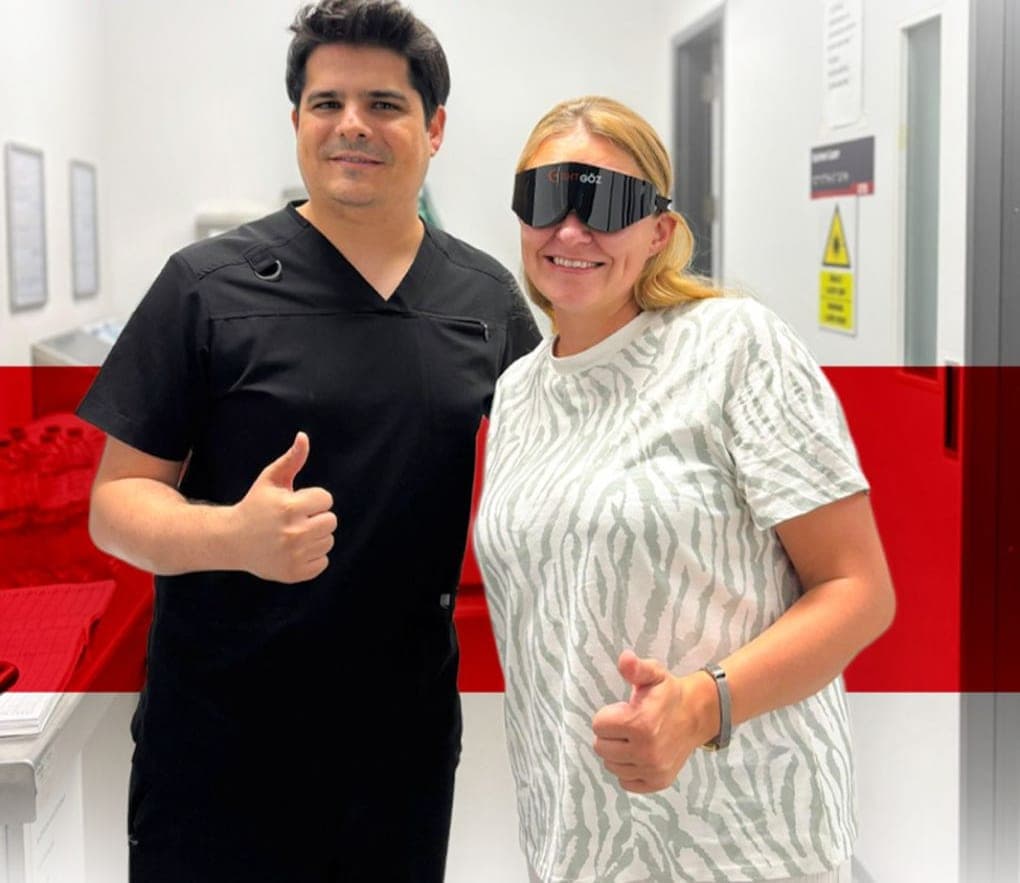
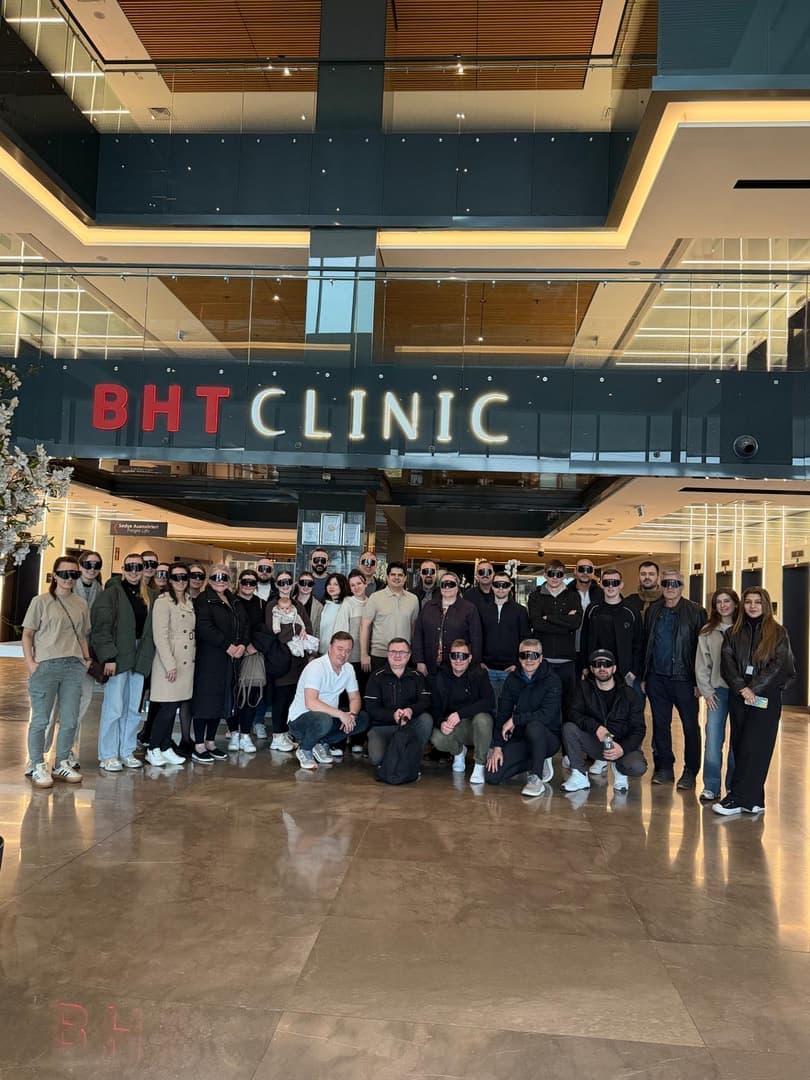
Real BHT CLINIC laser vision correction patients, from photographs the hospital has published on its own channels. A fuller album is available privately on request. The pictures show what the day itself looks like — the shield, the protective glasses, the hospital lobby afterwards — rather than a promise of any particular result. How much correction is achievable depends on your eyes, and your ophthalmologist confirms that at examination.
Send your latest prescription and we'll tell you which laser method our ophthalmologists expect to recommend — or whether a lens would serve you better.
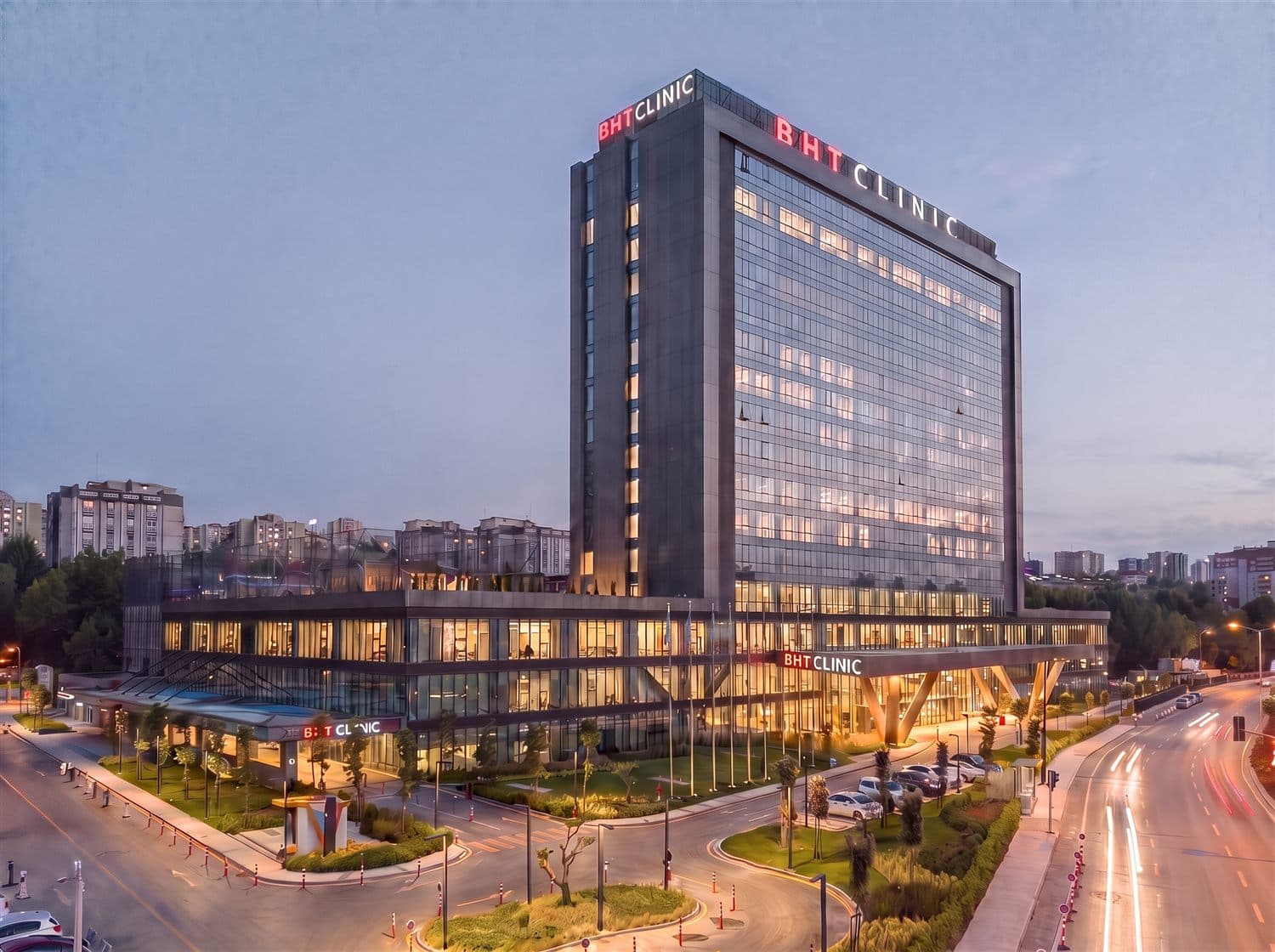
BHT CLINIC is a JCI-accredited hospital group in İstanbul treating international patients across eye and vision surgery. Laser vision correction is performed by specialist ophthalmologists in dedicated ophthalmic theatres inside a full hospital — not a day clinic — with medical backup on site. Patients from over 40 countries choose BHT for all-inclusive care: hotel, VIP transfers, a dedicated translator and structured aftercare.

Your stay in İstanbul
The order is the same for everyone — arrival, examination, treatment, post-operative check, home. What differs is the number of nights: three in İstanbul for a single eye, four for both eyes with femto-LASIK, and five for no-touch surface laser, which settles more slowly and is checked again before you are cleared to fly. Nothing goes on the theatre list until the examination is done: if your eyes say no, the trip stays a consultation and we tell you why.
You will be met by one of our drivers at İstanbul Airport.
Our driver takes you to your hotel to settle in and rest before your examination.
If you wear lenses, you will have been asked to stop before you fly — soft lenses about a week ahead, hard lenses longer — so your cornea measures true.
You will be met by one of our drivers at İstanbul Airport.
Our driver takes you to your hotel to settle in and rest before your examination.
If you wear lenses, you will have been asked to stop before you fly — soft lenses about a week ahead, hard lenses longer — so your cornea measures true.
Refraction, corneal topography, corneal thickness, pupil size, dry-eye screening and a retinal examination with your ophthalmologist.
Your ophthalmologist talks you through which laser method suits your cornea — femto-LASIK, LASIK or no-touch surface laser — or tells you plainly if laser is not suitable and a lens procedure is the better route.
Anaesthetic drops only, no general anaesthetic. Where you are suitable both eyes are treated in the same session, and the laser part itself is measured in seconds per eye.
You go back to rest with your eyes closed; there is no overnight admission for laser treatment. Your drops start immediately.
Your ophthalmologist examines both eyes, confirms healing and goes through your drop schedule before you are cleared to travel. No-touch surface laser is looked at again over the days that follow, because the surface settles more slowly.
Safe travels home — your vision keeps settling over the following weeks, and our team remains available for remote aftercare support.
Share your travel dates and your latest prescription — we'll build your full schedule, from airport pickup to departure, in one quick WhatsApp chat.
Accredited & certified


All-inclusive packages
Fixed all-inclusive packages designed for international patients. No hidden fees — examination, hospital, treatment, hotel, transfers and aftercare included. Which method you need is confirmed at your examination, and your written quote is agreed before you fly.
All-inclusive
No hidden fees
Your price
On request
Package includes
All-inclusive
No hidden fees
Your price
On request
Package includes
All-inclusive
No hidden fees
Your price
On request
Package includes
Not everyone is, and we would rather tell you before you book a flight than after you land. It depends on your corneal thickness and topography, your pupil size, your tear film, the health of your retina, and whether your prescription has been stable for at least a year. Thin or irregular corneas, untreated dry eye, a prescription that is still moving, pregnancy and certain medical conditions all rule laser out for now. Send your most recent prescription and we will tell you what is likely — suitability is confirmed by examination on arrival, and we will say so if the answer is no.
All three reshape the cornea with an excimer laser; they differ in how the surface is opened. LASIK lifts a thin corneal flap; femto-LASIK creates that flap with a femtosecond laser rather than a blade, which is what most suitable patients are offered. PRK and no-touch surface laser work on the surface itself, with no flap at all — slower to settle and more uncomfortable in the first days, but the safer choice where the cornea is thinner or where your work or sport carries a risk of a blow to the eye. Your ophthalmologist chooses between them from your measurements.
Laser eye surgery in Turkey costs considerably less than in the UK, Ireland or Germany — largely because hospital and staffing costs are lower, not because the standard of care is. Your price depends on the method your eyes need, whether you are treating one eye or both, and the length of your stay. We do not publish a single figure, because quoting a number before your prescription has been seen would be guesswork. You receive a written all-inclusive quote after your assessment, usually within 24 hours, and it does not change once agreed.
Your all-inclusive package covers the full eye examination, the treatment itself in a JCI-accredited hospital, your drops and protective glasses, the next-day post-operative check, hotel accommodation, VIP transfers between airport, hotel and hospital, an English-speaking coordinator, and remote aftercare for 12 months. Flights are not included, so you can book the route and dates that suit you.
In a full JCI-accredited hospital, in dedicated ophthalmic theatres with specialist ophthalmologists and medical backup on site. Laser treatment itself does not need an overnight admission: you return to your hotel to rest the same day and are examined again the next morning before you fly.
Anaesthetic drops are used, so the procedure itself is not painful — most people describe pressure rather than pain. Expect watering, grittiness and light sensitivity for the first hours afterwards. Surface laser treatments such as PRK are more uncomfortable than flap procedures for the first two to three days, and you are given drops and pain relief for that.
The first day is spent resting with your eyes closed; vision is typically hazy and lights carry halos or starbursts, particularly at night. Dryness is normal and is managed with lubricating drops, and you will be on a tapering schedule of antibiotic and anti-inflammatory drops set by your ophthalmologist. No rubbing, no eye make-up, no swimming, and screens in short spells at first. Haloes and dryness usually ease over the first weeks; surface laser takes longer to settle than flap procedures.
We will not promise that. Laser vision correction is done to reduce your dependence on glasses and lenses for distance, but the amount of correction achievable depends on your prescription and your cornea, some people still need glasses for particular tasks, and reading glasses become necessary for everyone with age regardless of laser treatment. Your ophthalmologist tells you what is realistic for your eyes at your examination, before anything is agreed.
Then laser is not what you should have. Where a prescription is too high for laser or the cornea is too thin, an implantable phakic lens (ICL) placed in front of your natural lens is often the better route. Where the issue is age-related reading vision rather than distance, a lens replacement — a trifocal or smart lens — addresses what laser cannot. Both are lens procedures with their own examination, stay and recovery, and our ophthalmologists will tell you which conversation you are actually having before you book anything.
Usually yes for laser treatment, where the examination confirms you are suitable. Lens procedures are more often done a day or two apart so the first eye can be checked before the second. Your surgeon decides at examination, not in advance.
Plan for 3 to 4 nights for flap procedures, so we can complete the examination, the treatment and your next-day check before you fly. Surface laser needs 4 to 5 nights because it settles more slowly. You should not fly home until your ophthalmologist has signed off at your post-operative check.
You leave with your drop schedule and written aftercare instructions, and your coordinator stays in contact for 12 months. We ask you to have your vision checked locally at the intervals your ophthalmologist sets, and you can reach us on WhatsApp at any point. If something concerns you — a change in vision, pain, or drops you are unsure about — we would rather hear about it early.